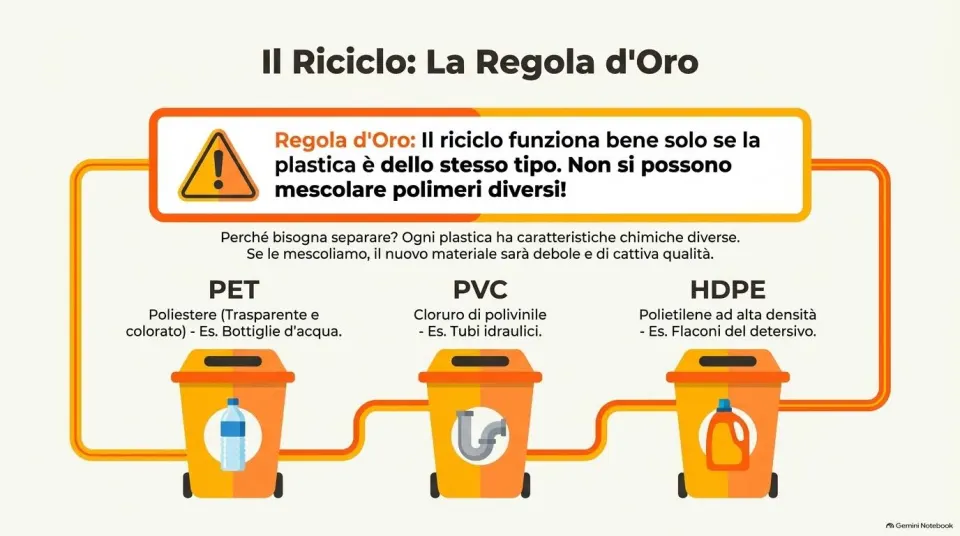
A lot of plastic waste can be recovered and turned back into raw material. To obtain good-quality recycled material, however, it is important that the different types of polymer are separated correctly. Materials such as PET, PVC and HDPE, that is, high-density polyethylene, have different characteristics. For this reason recycling works better when plastics of the same type are treated together. Recycled plastic can be used to produce many objects. It can become, for example, material for street furniture, synthetic fabrics, interior parts of cars, spectacle frames, scooter components or new containers.
Italiano
Molti rifiuti di plastica possono essere recuperati e trasformati nuovamente in materia prima. Per ottenere un materiale riciclato di buona qualità è però importante che vengano separati correttamente i diversi tipi di polimero. Materiali come PET, PVC e HDPE, cioè polietilene ad alta densità, possiedono infatti caratteristiche differenti. Per questo motivo il riciclo funziona meglio quando vengono trattate insieme plastiche dello stesso tipo. La plastica riciclata può essere utilizzata per produrre numerosi oggetti. Può diventare, per esempio, materiale per arredi urbani, tessuti sintetici, parti interne delle automobili, montature per occhiali, componenti per scooter o nuovi contenitori.
The treatment of plastic waste
Before they can be used again, bottles, flasks, trays and other plastic waste must go through several treatment phases.
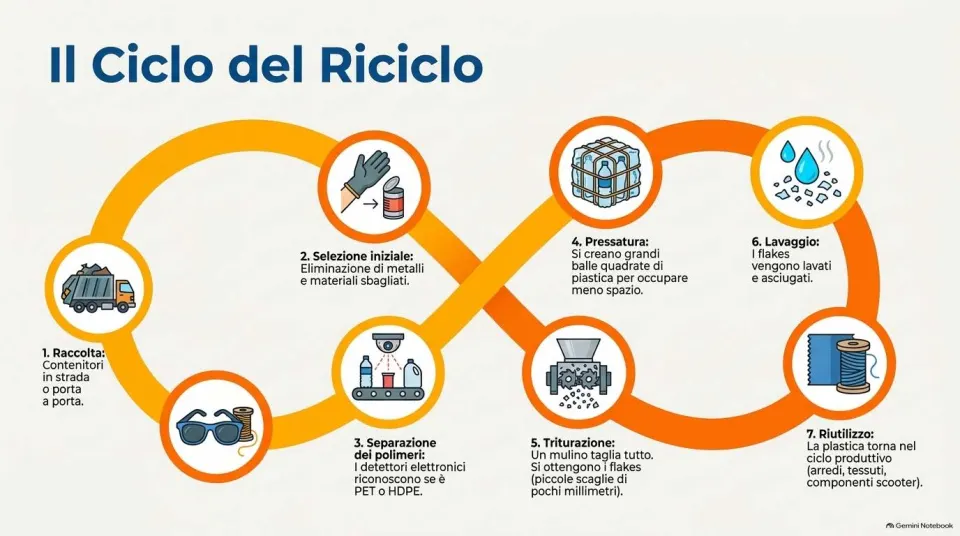
Collection
The waste is first recovered through the collection systems present in the area. It can be collected in street containers or through the door-to-door system.
Sorting
Once they arrive at the plants, the waste items are checked and any foreign materials present by mistake are removed, such as aluminium cans, steel or other objects that are not plastic.
Separation of polymers
Next, the plastics are divided according to the material they are made of. The plants use special detectors, that is, electronic systems able to recognise the different types of plastic. In this way it is possible to distinguish, for example, PVC, clear PET, coloured PET and HDPE. After automatic sorting there can also be a check by operators, who remove any errors and so increase the purity of the material.
Baling
Plastic objects take up a lot of space, so they are compressed with large presses. This forms compact bales, which are easier to transport to the plants where the next processing stages will take place.
Shredding
Plastics of the same type are then reduced to small fragments. In the case of PET bottles, for example, a blade mill can be used. The bottles are cut until small flakes a few millimetres long are obtained, called flakes.
Washing
The flakes are washed to remove food residues, dirt and other impurities. After washing they are dried and prepared for the following phases.
Packing and reuse
Once clean and dry, the flakes are collected in large sacks or industrial containers and sent to the companies that produce new materials. The shredded plastic can be transformed again and used to make other products, thus returning to the production cycle.
Italiano
Il trattamento dei rifiuti in plastica
Prima di poter essere utilizzati nuovamente, bottiglie, flaconi, vaschette e altri rifiuti in plastica devono attraversare diverse fasi di trattamento.
Raccolta
I rifiuti vengono prima recuperati attraverso i sistemi di raccolta presenti sul territorio. Possono essere raccolti tramite contenitori stradali oppure attraverso il sistema porta a porta.
Selezione
Una volta arrivati negli impianti, i rifiuti vengono controllati e vengono eliminati i materiali estranei presenti per errore, come lattine di alluminio, acciaio o altri oggetti che non appartengono alla plastica.
Separazione dei polimeri
Successivamente le plastiche vengono divise in base al materiale di cui sono composte. Negli impianti vengono utilizzati appositi detettori, cioè sistemi elettronici capaci di riconoscere i diversi tipi di plastica. In questo modo è possibile distinguere, per esempio, PVC, PET trasparente, PET colorato e HDPE. Dopo la selezione automatica può esserci anche un controllo da parte degli operatori, che eliminano eventuali errori e aumentano così la purezza del materiale.
Pressatura
Gli oggetti in plastica occupano molto spazio e quindi vengono compressi con grandi presse. Si formano così delle balle compatte, più semplici da trasportare verso gli impianti in cui avverranno le lavorazioni successive.
Triturazione
Le plastiche dello stesso tipo vengono poi ridotte in piccoli frammenti. Nel caso delle bottiglie in PET, per esempio, può essere utilizzato un mulino a lame. Le bottiglie vengono tagliate fino a ottenere piccole scaglie lunghe pochi millimetri, chiamate flakes.
Lavaggio
I flakes vengono lavati per eliminare residui di alimenti, sporco e altre impurità. Dopo il lavaggio vengono asciugati e preparati per le fasi successive.
Confezionamento e riutilizzo
Una volta pulite e asciutte, le scaglie vengono raccolte in grandi sacchi o contenitori industriali e inviate alle aziende che si occupano della produzione di nuovi materiali. La plastica triturata può essere nuovamente trasformata e utilizzata per realizzare altri prodotti, tornando così nel ciclo produttivo.