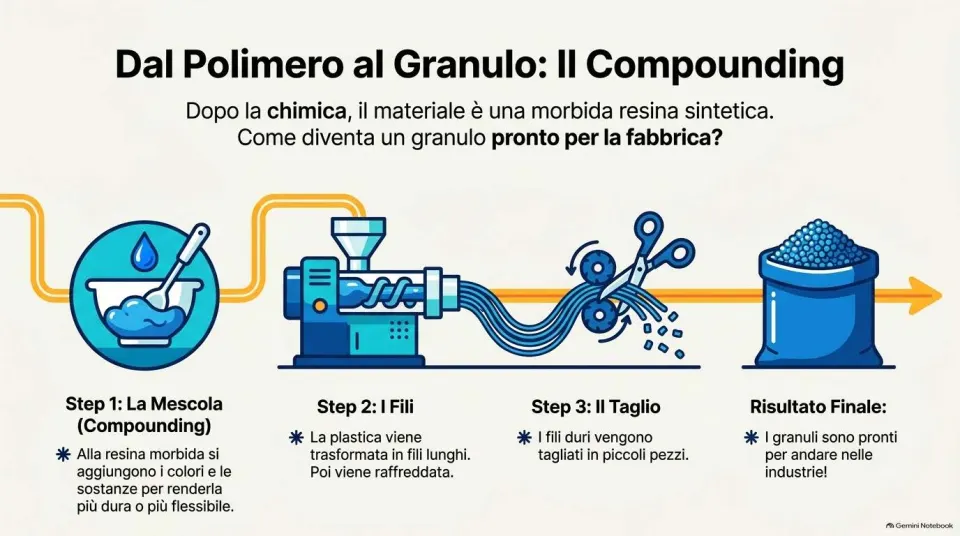
To understand how a plastic is produced, we can take polyethylene as an example. It is indicated by the abbreviation PE and is one of the most common thermoplastics. The process can start from natural gas and includes several phases.
Refining
In petrochemical plants, natural gas is treated through changes in temperature. In this way it is possible to separate the different substances it contains. Among these is ethane, which can be used to produce polyethylene.
Cracking
The ethane is then subjected to a process called steam cracking, that is, the breaking of molecules by means of high temperatures and steam. This treatment produces simpler molecules of ethylene, called monomers. After cracking, the material is cooled rapidly. The ethylene molecules thus begin to link together, forming small chains made mainly of carbon and hydrogen.
Polymerisation
The ethylene monomers are then subjected to temperatures above 300 °C and to very high pressures. Under these conditions their bonds change and a great many molecules can join together. In this way very long molecules called polymers are formed. The characteristics of plastics depend precisely on the structure of these long molecular chains.
Italiano
Per capire come viene prodotta una materia plastica possiamo prendere come esempio il polietilene, indicato con la sigla PE, una delle termoplastiche più diffuse. Il processo può partire dal gas naturale e comprende diverse fasi.
Raffinazione
Negli impianti petrolchimici il gas naturale viene trattato attraverso variazioni di temperatura. In questo modo è possibile separare le diverse sostanze che contiene. Tra queste c'è l'etano, che può essere utilizzato per la produzione del polietilene.
Cracking
L'etano viene poi sottoposto a un processo chiamato steam cracking, cioè una rottura delle molecole attraverso temperature elevate e vapore. Da questo trattamento si ottengono molecole più semplici di etilene, chiamate monomeri. Dopo il cracking il materiale viene rapidamente raffreddato. Le molecole di etilene iniziano così a collegarsi tra loro formando piccole catene costituite principalmente da carbonio e idrogeno.
Polimerizzazione
I monomeri di etilene vengono successivamente sottoposti a temperature superiori a 300 °C e a pressioni molto elevate. In queste condizioni i loro legami si modificano e moltissime molecole possono unirsi tra loro. Si formano così molecole molto lunghe chiamate polimeri. Le caratteristiche delle materie plastiche dipendono proprio dalla struttura di queste lunghe catene molecolari.
Compounding
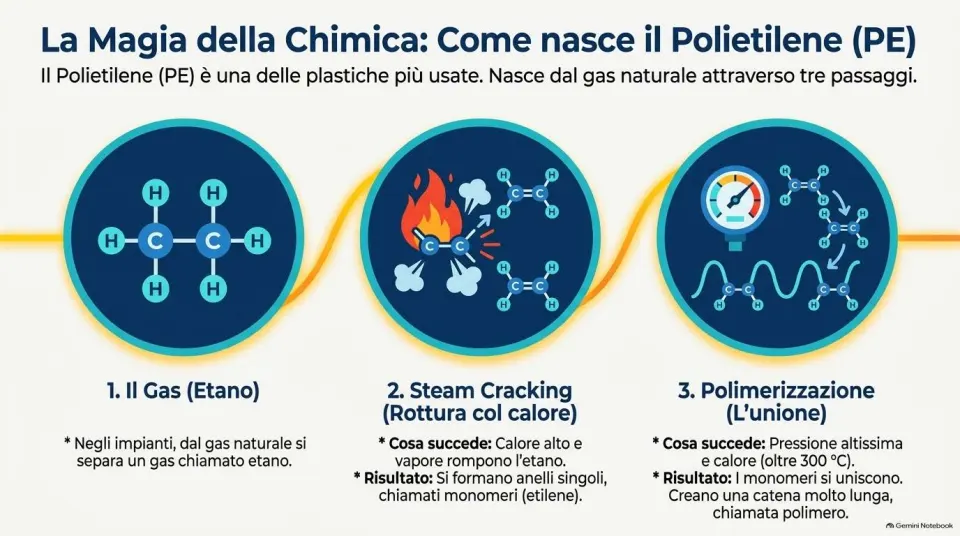
At the end of polymerisation, the material is in the form of a synthetic resin, which is at first soft and pasty. Various substances are added to the resin, such as colourants, hardeners and plasticisers, which make it possible to change the colour and the properties of the material. The mixture is then turned into long plastic threads. After cooling, these threads are cut into small pieces, and so the granules are obtained, ready to be processed by industry.
Italiano
Compounding
Al termine della polimerizzazione il materiale si presenta sotto forma di resina sintetica, inizialmente morbida e pastosa. Alla resina vengono aggiunte diverse sostanze, come coloranti, indurenti e plastificanti, che permettono di modificare il colore e le proprietà del materiale. La miscela viene poi trasformata in lunghi fili di plastica. Dopo il raffreddamento, questi fili vengono tagliati in piccoli pezzi e si ottengono così i granuli, pronti per essere lavorati dalle industrie.