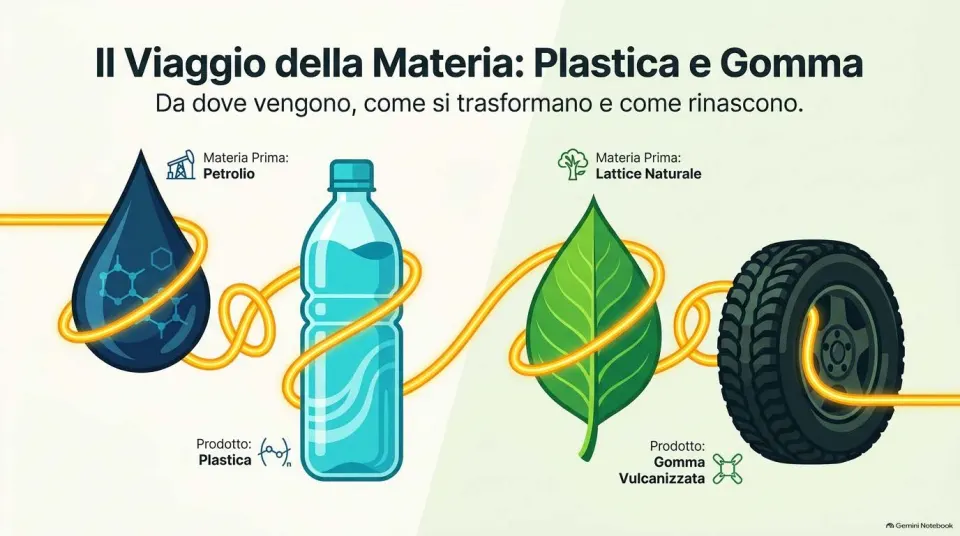
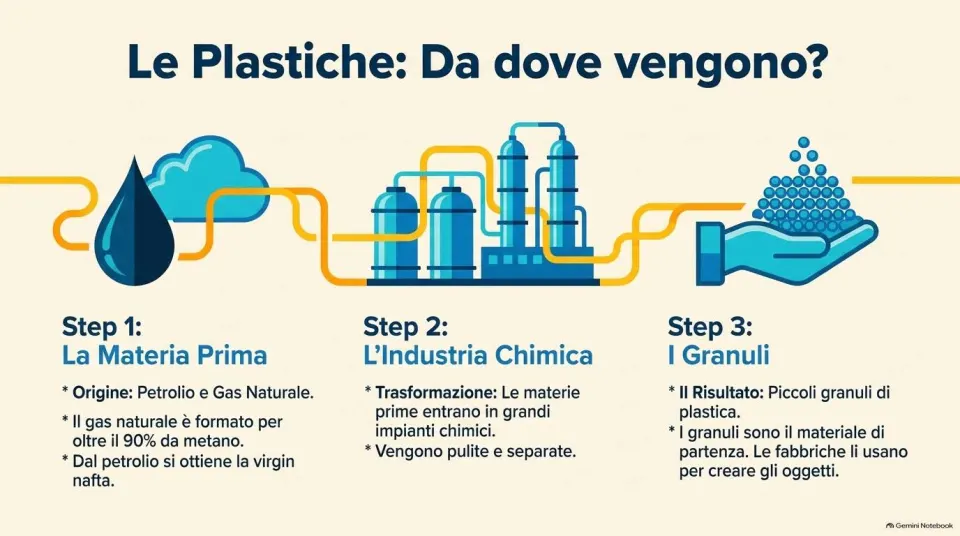
The word plastic brings to mind the idea of a material that can be shaped. In fact, one of the main characteristics of plastics is precisely their ability to take on very different shapes during processing. With plastic it is possible to make objects that are very different from one another, such as bottles, pipes, films, containers, car components and parts of household appliances. Most plastics are produced from virgin naphtha, a substance obtained from processing petroleum, or from natural gas, which is made up of more than 90% methane. These raw materials are transformed in chemical industry plants until small granules of plastic material are obtained. The granules are the starting material that industries later use to produce objects.
Italiano
Il termine plastica richiama l'idea di un materiale che può essere modellato. Una delle principali caratteristiche delle materie plastiche, infatti, è proprio la possibilità di assumere forme molto diverse durante la lavorazione. Con la plastica si possono realizzare oggetti molto differenti tra loro, come bottiglie, tubi, pellicole, contenitori, componenti per automobili e parti di elettrodomestici. La maggior parte delle plastiche viene prodotta a partire dalla virgin nafta, una sostanza ottenuta dalla lavorazione del petrolio, oppure dal gas naturale, composto per oltre il 90% da metano. Queste materie prime vengono trasformate negli impianti dell'industria chimica fino a ottenere piccoli granuli di materiale plastico. I granuli rappresentano il materiale di partenza utilizzato successivamente dalle industrie per produrre gli oggetti.
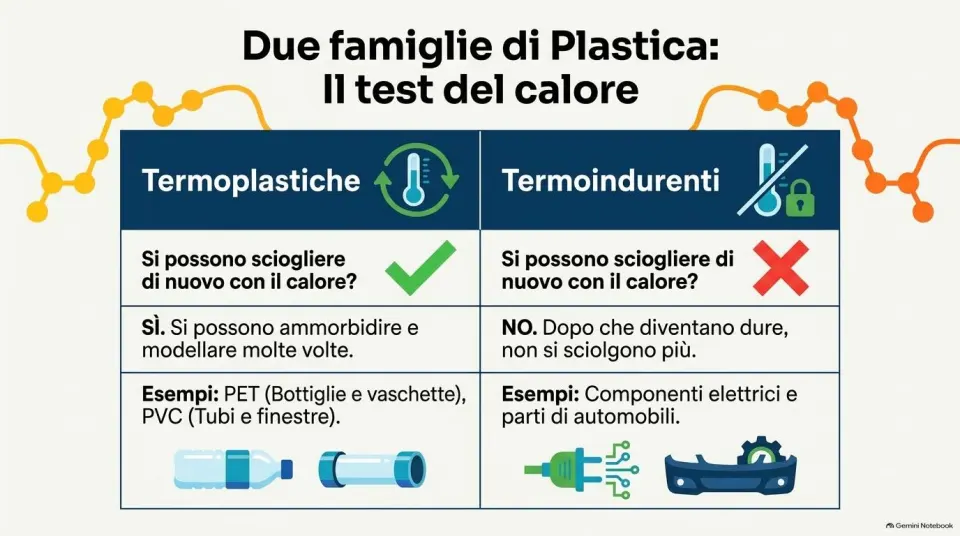
Plastics can be divided into two large categories: thermosetting plastics and thermoplastics. Thermosetting plastics can be shaped only once. After they have taken their final shape and hardened, they cannot be softened again with heat. They are used, for example, for some electrical and electronic components and for car parts.
Thermoplastics, on the other hand, can be softened with heat and therefore shaped several times. This group includes PVC, used for example for pipes, window frames and coverings, and PET, very common in the production of bottles, trays and containers.
Italiano
Le plastiche si possono dividere in due grandi categorie: termoindurenti e termoplastiche. Le plastiche termoindurenti possono essere modellate una sola volta. Dopo che hanno assunto la loro forma definitiva e si sono indurite, non possono essere nuovamente ammorbidite con il calore. Sono utilizzate, per esempio, per alcuni componenti elettrici ed elettronici e per parti di automobili.
Le termoplastiche, invece, possono essere ammorbidite attraverso il calore e quindi modellate più volte. Appartengono a questo gruppo il PVC, utilizzato ad esempio per tubazioni, serramenti e rivestimenti, e il PET, molto diffuso nella produzione di bottiglie, vaschette e contenitori.