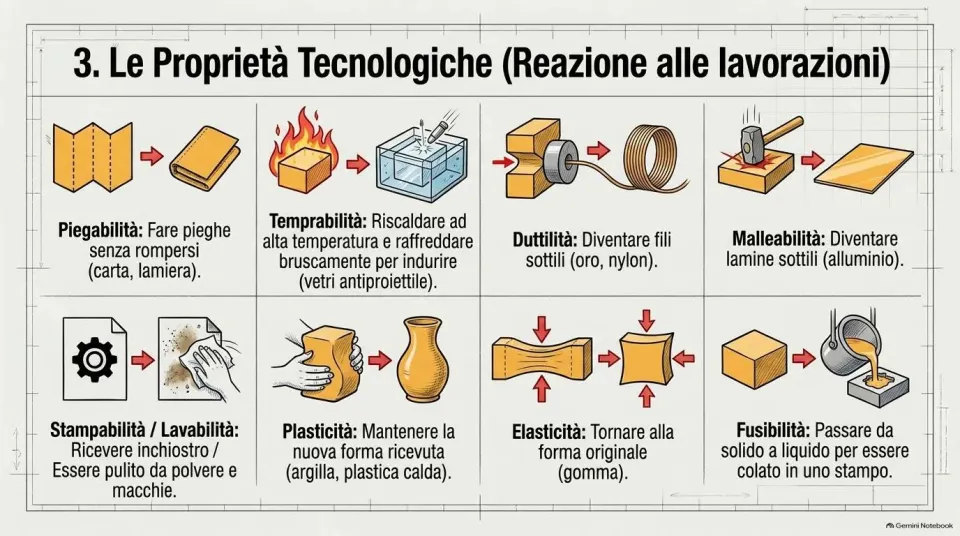
Technological properties indicate how suitable a material is for certain manufacturing processes.
- Bendability: it is the ability to be bent without breaking. For example, a thin metal sheet can be bent to make the casing of a container.
- Hardenability: it is the ability of a material to undergo hardening (tempering). For example, some metal tools are hardened to increase their hardness.
- Ductility: it is the ability to be drawn into thin wires. For example, copper can be drawn into wires used in electrical systems.
- Malleability: it is the ability to be formed into thin sheets. For example, aluminium can be reduced to very thin foils used for packaging.
- Printability: it is the ability to receive inks and dyes. For example, a cardboard package can be printed with text, images and product information.
- Washability: it is the ability to be washed without deteriorating. For example, tiles are used in kitchens and bathrooms also because they are easy to wash.
- Plasticity: it is the ability to be shaped and keep the shape received. For example, clay can be shaped to make a vase.
- Elasticity: it is the ability to return to the original shape after being deformed. For example, a spring returns to its shape after being compressed.
- Fusibility: it is the ability to change from the solid to the liquid state through heat. For example, a metal can be melted and poured into a mould to obtain a component.
Italiano
Le proprietà tecnologiche indicano quanto un materiale sia adatto a essere sottoposto a determinate lavorazioni.
- Piegabilità: è la capacità di essere piegato senza rompersi. Per esempio, una sottile lamiera può essere piegata per realizzare il rivestimento di un contenitore.
- Temprabilità: è la capacità di un materiale di essere sottoposto alla tempra. Per esempio, alcuni utensili metallici vengono temprati per aumentarne la durezza.
- Duttilità: è la capacità di essere trasformato in fili sottili. Per esempio, il rame può essere trasformato in fili utilizzati negli impianti elettrici.
- Malleabilità: è la capacità di essere trasformato in lamine sottili. Per esempio, l’alluminio può essere ridotto in sottilissimi fogli utilizzati per gli imballaggi.
- Stampabilità: è la capacità di ricevere inchiostri e coloranti. Per esempio, una confezione di cartone può essere stampata con testi, immagini e informazioni sul prodotto.
- Lavabilità: è la capacità di essere lavato senza deteriorarsi. Per esempio, le piastrelle vengono utilizzate in cucine e bagni anche perché sono facilmente lavabili.
- Plasticità: è la capacità di essere modellato e mantenere la forma ricevuta. Per esempio, l’argilla può essere modellata per realizzare un vaso.
- Elasticità: è la capacità di tornare alla forma iniziale dopo una deformazione. Per esempio, una molla ritorna alla propria forma dopo essere stata compressa.
- Fusibilità: è la capacità di passare dallo stato solido a quello liquido attraverso il calore. Per esempio, un metallo può essere fuso e colato in uno stampo per ottenere un componente.